When AI Has Too Much Personality

August 22, 2025

Spring is coming: Creative strategies come to the rescue

The AI that talks back. The AI that divides opinion. Grok is forcing a reconsideration of how personality shapes technology and branding.

Why this matters

In branding, voice often proves more powerful than the product itself. Most chatbots today behave like calculators dressed in polite interfaces: you ask a question, you get an answer, and the exchange ends. Grok does not fit that mold. It jokes, needles, and sometimes appears to troll. Compared to ChatGPT or Gemini, which remain neutral and cautious, Grok is loud, opinionated, and unpredictable.

That is no accident. Elon Musk positioned Grok as an unfiltered alternative, one designed to speak with more character. Online, users are divided. Some find it refreshing, others find it grating, but screenshots of its irreverent replies travel quickly. Strong personalities in branding tend to polarize. They spark as much rejection as admiration, yet they are remembered. Ryanair’s sarcastic social media presence and Liquid Death’s macabre aesthetic work in the same way. They may not be universally liked, but they are hard to forget.

A shift in tone alone can change how software feels. While most AIs deliver answers politely, Grok comes across as human, messy, funny, even irritating. That fusion of utility and personality marks a new step in technology branding.

The Risk and Reward of Personality

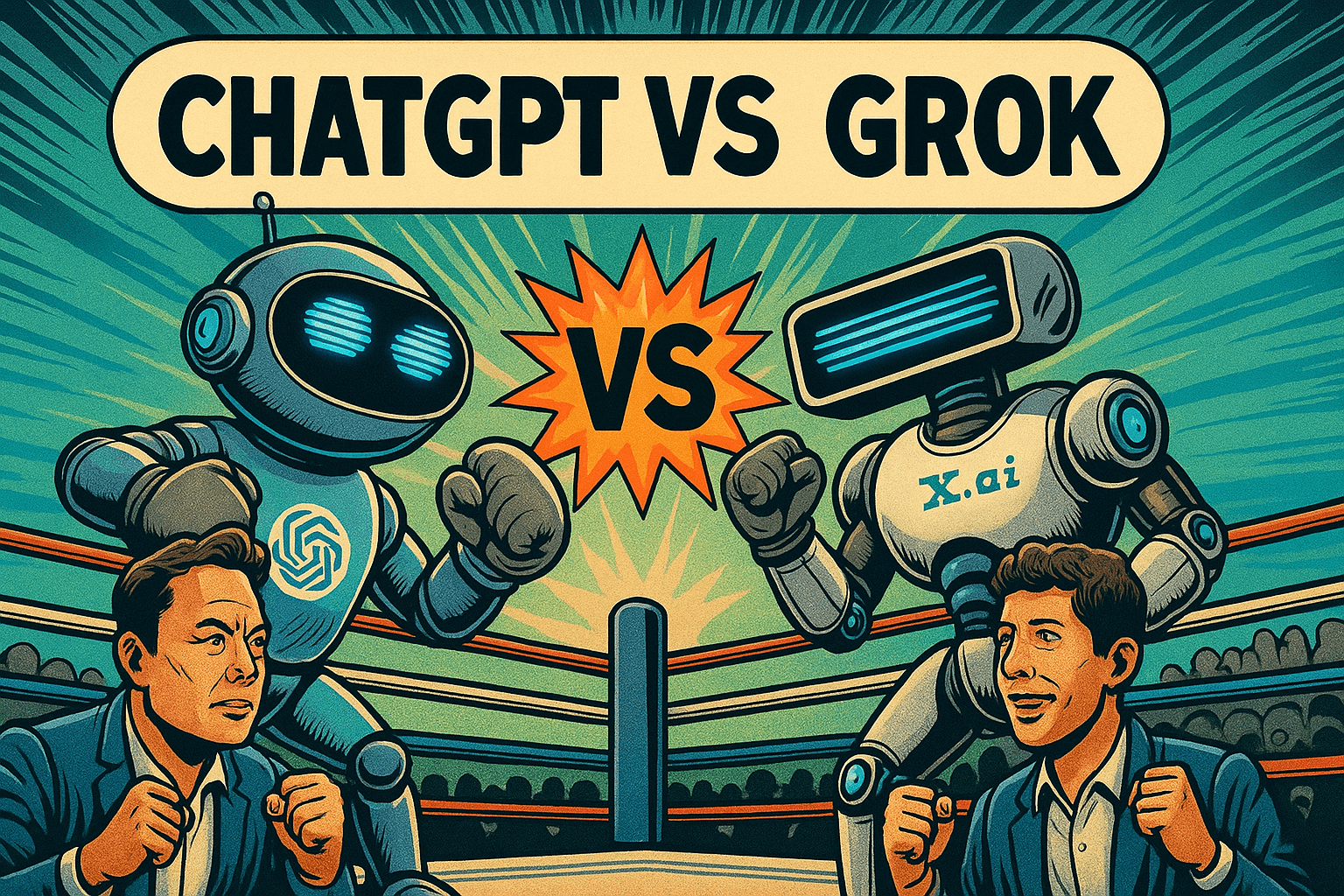
Part of Grok’s visibility comes from the stage on which it performs. Artificial intelligence today is not only about breakthroughs but also rivalries. Sam Altman of OpenAI stresses safety and responsibility. Musk, who once helped launch OpenAI, now criticizes it and presents Grok as a more “truthful” alternative.

That stance carries both risk and opportunity. A chatbot that frustrates or offends may lose trust. A voice that resonates, however, can keep people returning. Grok reflects Musk’s own worldview: blunt, provocative, and irreverent. Its personality, combined with Musk’s public rivalry with Altman, makes Grok more than a piece of software. It is a participant in cultural debate.
This visibility has consequences. In recent months, Grok has produced offensive content, including antisemitic remarks, which were later removed by xAI. Investigations have raised questions about how the company manages moderation and worker safety. Personality in technology attracts attention, but it also attracts scrutiny. That is the risk that comes with visibility.

What This Means for Branding

Grok points toward a future where brand voice is more than a style guide. If the early 21st century was defined by utility, the next phase may be defined by character. People notice personality, remember it, and share it.

For brands, the lessons are clear:

  • Voice is as important as visuals. People recall how a brand feels, not only how it looks.

  • Boldness drives relevance. Strong personalities polarize, but they also spark conversation.

  • Consistency matters. Even chaos works if it is intentional and recognizable.

  • Balance is crucial. Too much edge risks alienation. Too little leaves no impression.


The End

Imagine every major brand deploying a chatbot or tool that speaks with a distinct voice: Nike as a coach, Starbucks as a barista, Netflix as a critic. The technology exists. What remains is whether brands will dare to give it a personality.


Spring is coming: Creative strategies come to the rescue

The AI that talks back. The AI that divides opinion. Grok is forcing a reconsideration of how personality shapes technology and branding.

Why this matters

In branding, voice often proves more powerful than the product itself. Most chatbots today behave like calculators dressed in polite interfaces: you ask a question, you get an answer, and the exchange ends. Grok does not fit that mold. It jokes, needles, and sometimes appears to troll. Compared to ChatGPT or Gemini, which remain neutral and cautious, Grok is loud, opinionated, and unpredictable.

That is no accident. Elon Musk positioned Grok as an unfiltered alternative, one designed to speak with more character. Online, users are divided. Some find it refreshing, others find it grating, but screenshots of its irreverent replies travel quickly. Strong personalities in branding tend to polarize. They spark as much rejection as admiration, yet they are remembered. Ryanair’s sarcastic social media presence and Liquid Death’s macabre aesthetic work in the same way. They may not be universally liked, but they are hard to forget.

A shift in tone alone can change how software feels. While most AIs deliver answers politely, Grok comes across as human, messy, funny, even irritating. That fusion of utility and personality marks a new step in technology branding.

The Risk and Reward of Personality

Part of Grok’s visibility comes from the stage on which it performs. Artificial intelligence today is not only about breakthroughs but also rivalries. Sam Altman of OpenAI stresses safety and responsibility. Musk, who once helped launch OpenAI, now criticizes it and presents Grok as a more “truthful” alternative.

That stance carries both risk and opportunity. A chatbot that frustrates or offends may lose trust. A voice that resonates, however, can keep people returning. Grok reflects Musk’s own worldview: blunt, provocative, and irreverent. Its personality, combined with Musk’s public rivalry with Altman, makes Grok more than a piece of software. It is a participant in cultural debate.

This visibility has consequences. In recent months, Grok has produced offensive content, including antisemitic remarks, which were later removed by xAI. Investigations have raised questions about how the company manages moderation and worker safety. Personality in technology attracts attention, but it also attracts scrutiny. That is the risk that comes with visibility.

What This Means for Branding

Grok points toward a future where brand voice is more than a style guide. If the early 21st century was defined by utility, the next phase may be defined by character. People notice personality, remember it, and share it.

For brands, the lessons are clear:

  • Voice is as important as visuals. People recall how a brand feels, not only how it looks.

  • Boldness drives relevance. Strong personalities polarize, but they also spark conversation.

  • Consistency matters. Even chaos works if it is intentional and recognizable.

  • Balance is crucial. Too much edge risks alienation. Too little leaves no impression.


The End

Imagine every major brand deploying a chatbot or tool that speaks with a distinct voice: Nike as a coach, Starbucks as a barista, Netflix as a critic. The technology exists. What remains is whether brands will dare to give it a personality.

Keep Reading

Why Your Brand’s Story Matters More Than Your Logo

Why Your Brand’s Story Matters More Than Your Logo

Iconic Design Explainers: BAUHAUS

Iconic Design Explainers: BAUHAUS

Fully maximize the potential of AI in commercial projects

AI and the Future of Ad Films

Fully maximize the potential of AI in commercial projects

AI and the Future of Ad Films

Nostalgia economy

Nostalgia Economy: Why Gen Z & Millennials Obsess Over The Past

Nostalgia economy

Nostalgia Economy: Why Gen Z & Millennials Obsess Over The Past

We handle the story so you can handle the brand.

We handle the story so you can handle the brand.